
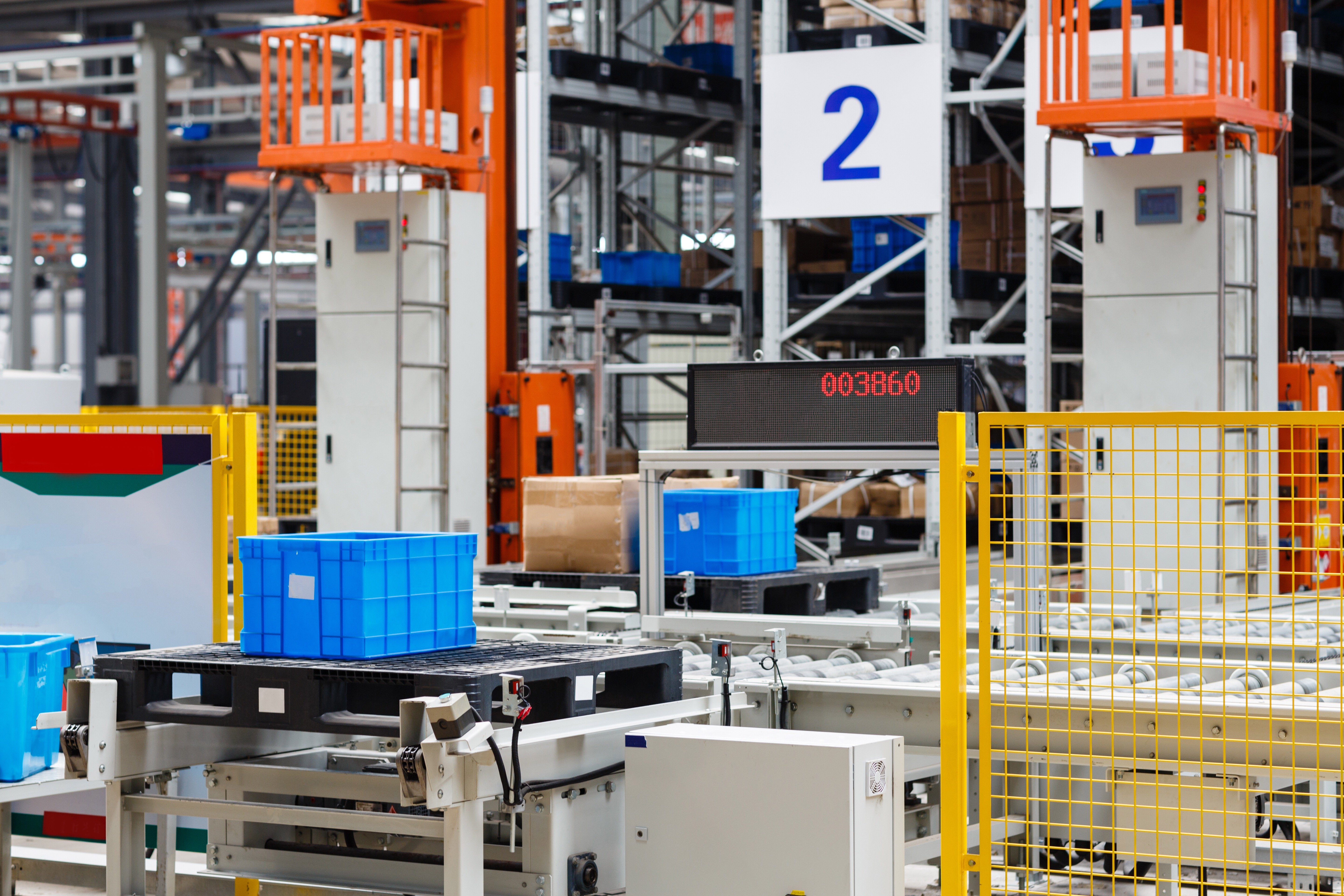
Warehouse Automation: How Warehouse Owners Can Scale

For years, warehouse growth followed a simple formula.
More customers meant hiring more people. More people meant more capacity. More capacity meant more revenue.
That model worked when labor was readily available, customer expectations were lower, and growth did not create significant operational strain.
Today, that environment has changed.
Warehouse owners are dealing with labor shortages, rising wages, tighter margins, and customers that expect faster service, greater accuracy, and more visibility than ever before.
The biggest challenge facing many warehouse operators is no longer finding new business.
It's building an operation that can handle growth without sacrificing profitability.
Why Are Warehouse Owners Looking at Automation?
Warehouse owners are exploring automation because traditional growth models are becoming harder to sustain.
As volume increases, many operations experience the same problems:
More labor requirements.
More operational complexity.
More training and management challenges.
More pressure on margins.
Growth should create value. Instead, many warehouses find that growth creates friction.
The question shifts from "How do we add capacity?" to "How do we scale efficiently?"
Automation helps answer that question.
What Problems Does Warehouse Automation Solve?
Warehouse automation helps reduce the operational constraints that limit growth.
Depending on the operation, automation can improve:
Order fulfillment speed.
Picking accuracy.
Inventory movement.
Labor productivity.
Operational visibility.
Throughput capacity.
The goal is not to replace employees.
The goal is to help employees work more efficiently while allowing the business to grow without increasing labor at the same rate as volume.
Can Warehouse Automation Reduce Labor Costs?
Automation can reduce labor dependency, but that is only part of the value.
Most warehouse owners do not invest in automation solely to reduce headcount.
They invest because labor availability is unpredictable, turnover is expensive, and scaling through labor alone becomes increasingly difficult.
Automation creates more consistent operations and allows teams to focus on higher-value work instead of repetitive tasks.
For many warehouses, the benefit is greater operational stability rather than simply lower labor costs.
How Much Does Warehouse Automation Cost?
One of the most common questions warehouse owners ask is, "How much does warehouse automation cost?"
The better question is often, "What is the cost of doing nothing?"
Every warehouse has hidden costs that impact growth and profitability.
These may include:
Missed customer opportunities due to capacity limitations.
Excess labor costs tied to inefficient processes.
Operational bottlenecks that slow growth.
Difficulty competing for larger contracts.
Reduced profitability as volume increases.
Automation should be evaluated as a business investment, not just an equipment purchase.
The return comes from creating additional capacity, improving efficiency, and supporting long-term growth.
Do You Need to Automate Your Entire Warehouse?
No.
In fact, most successful automation initiatives start with a single problem.
Warehouse owners often begin by addressing:
Picking inefficiencies.
Repetitive manual processes.
Internal material movement.
High-volume bottlenecks.
Areas with ongoing labor challenges.
The most effective approach is usually to identify a specific operational constraint, test a solution, measure results, and expand from there.
The goal is steady improvement, not a complete transformation overnight.
Does Automation Increase Warehouse Value?
Yes, when it improves operational performance.
Warehouses that can scale efficiently, operate consistently, and support larger customer requirements often become more attractive to customers, partners, and potential buyers.
Automation can help create:
More predictable operations.
Greater scalability.
Improved customer service.
Reduced operational risk.
Stronger long-term profitability.
Those characteristics often contribute to a more valuable business.
Is Warehouse Automation Right for Every Business?
Not every warehouse needs the same technology.
Every operation has different customers, processes, labor challenges, and growth goals.
However, every warehouse owner should understand where operational constraints exist and whether those constraints could limit future growth.
The conversation around automation is no longer just about technology.
It's about building a warehouse operation that can grow, compete, and remain profitable in a changing market.
The real question is not whether automation belongs in your future.
The real question is whether your current operating model can support the future you want to build.